Vera Bauer · 7 October 2026
Adaptive Synchronization Techniques for Looped Data Flows in Scalable Cloud Environments
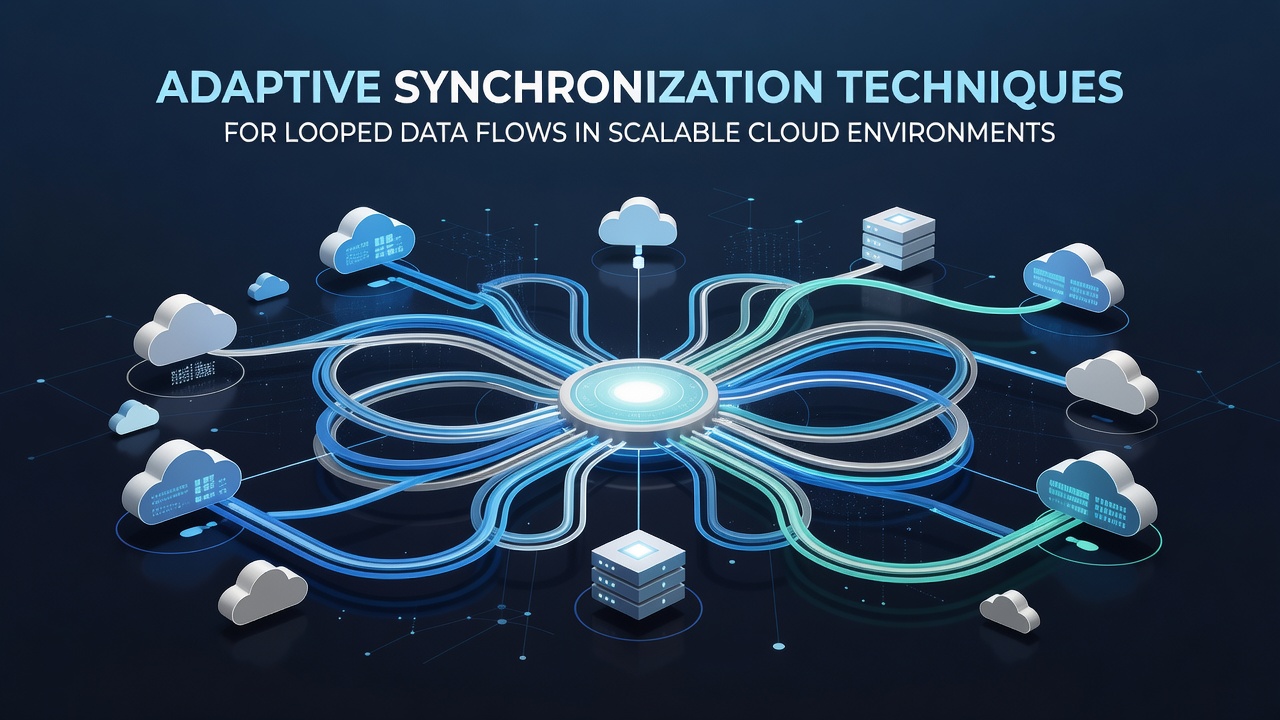
Looped data flows occur when information cycles repeatedly through processing stages in cloud systems, and adaptive synchronization techniques adjust timing, buffering, and resource allocation in real time to maintain consistency without introducing excessive latency, while researchers at institutions across multiple continents continue to refine these methods for environments that scale dynamically.
Data cycles appear in machine learning training pipelines, real-time analytics engines, and feedback-driven applications where outputs feed back as inputs, and synchronization becomes essential because any misalignment can cascade into bottlenecks or data corruption across nodes.
Core Components of Looped Data Flows
Engineers define looped data flows by their iterative nature, where each cycle involves ingestion, transformation, validation, and redistribution, yet the volume and velocity of data can shift unpredictably in large-scale deployments, which forces synchronization layers to respond with algorithms that monitor queue depths, network throughput, and compute utilization simultaneously.
Studies from Australian research centers indicate that these flows often operate under strict consistency models while allowing eventual convergence, and the balance between strictness and flexibility determines overall system stability during peak loads.
Challenges in Scalable Cloud Setups
Scalability introduces variable latency between regions, heterogeneous hardware configurations, and fluctuating tenant demands that complicate synchronization, so systems must detect when a loop begins to drift and apply corrective measures such as dynamic partitioning or predictive prefetching before errors accumulate.
Reports compiled by European data infrastructure consortia show that unaddressed drift in looped flows accounts for measurable increases in retry rates and energy consumption, prompting operators to integrate monitoring that tracks cycle completion times across thousands of virtual instances.
Primary Adaptive Techniques
One established approach uses feedback-driven clock adjustment, where nodes exchange timestamp vectors and recalibrate their local clocks based on observed delays, while another relies on elastic buffering that expands or contracts storage windows according to incoming data rates detected through continuous sampling.
Token-based coordination mechanisms assign lightweight permits to data packets entering loops, and these permits carry metadata that downstream components read to decide whether to process immediately or defer, which reduces contention during simultaneous cycle iterations.
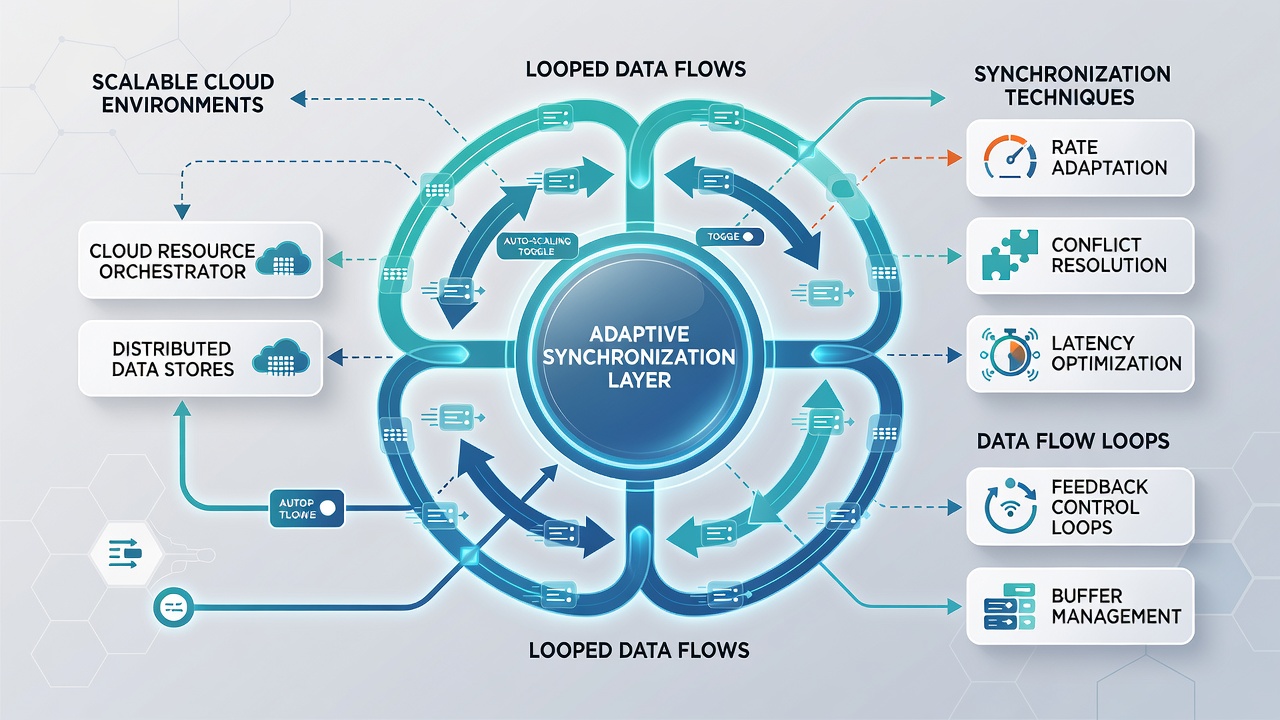
Hybrid methods combine elements of both strategies, applying machine-learned models trained on historical traffic patterns to anticipate synchronization needs hours in advance, and operators in North American cloud facilities have documented reduced variance in cycle completion times after deploying such hybrids.
Implementation Patterns Observed in 2026
By October 2026, several production environments had incorporated container-native synchronization agents that run alongside application pods, and these agents expose APIs for querying current loop state while automatically adjusting parameters based on policy files updated through centralized control planes.
Academic teams publishing through the Association for Computing Machinery have detailed how graph-based representations of data dependencies help identify critical paths within loops, allowing synchronization efforts to focus on those paths rather than applying uniform controls everywhere.
Resource reallocation occurs through integration with autoscaling groups that receive signals from synchronization monitors, and when cycle latency exceeds thresholds, additional instances spin up with pre-warmed caches tuned to the specific data patterns observed in prior iterations.
Performance Metrics and Monitoring
Key indicators include cycle throughput measured in completed iterations per second, synchronization overhead expressed as a percentage of total compute time, and drift accumulation tracked via sequence number gaps, while dashboards aggregate these values across availability zones to provide operators with unified visibility.
Data collected by Canadian federal technology assessment programs demonstrates that environments employing adaptive techniques sustain higher effective utilization rates compared with static configurations, particularly when workloads exhibit bursty cyclic behavior.
Conclusion
Adaptive synchronization for looped data flows continues to evolve through incremental improvements in monitoring granularity, predictive modeling, adn cross-region coordination protocols, and organizations deploying these methods report more resilient performance under variable loads without compromising data integrity.
Future refinements will likely draw on emerging hardware capabilities such as programmable network interface cards that offload synchronization logic, yet the foundational principles of real-time adjustment and feedback remain central to maintaining stability in expanding cloud infrastructures.