Sofia Klein · 9 September 2026
Exploring Iterative Resource Cycles in Distributed Network Frameworks
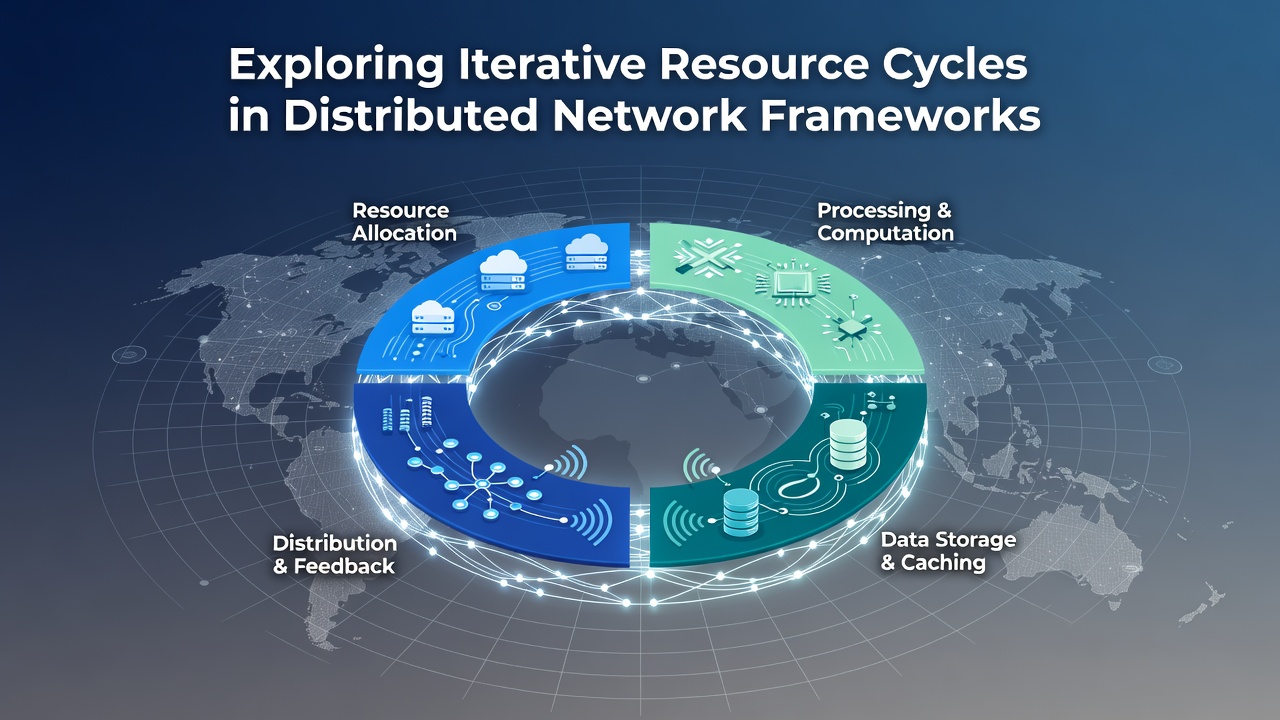
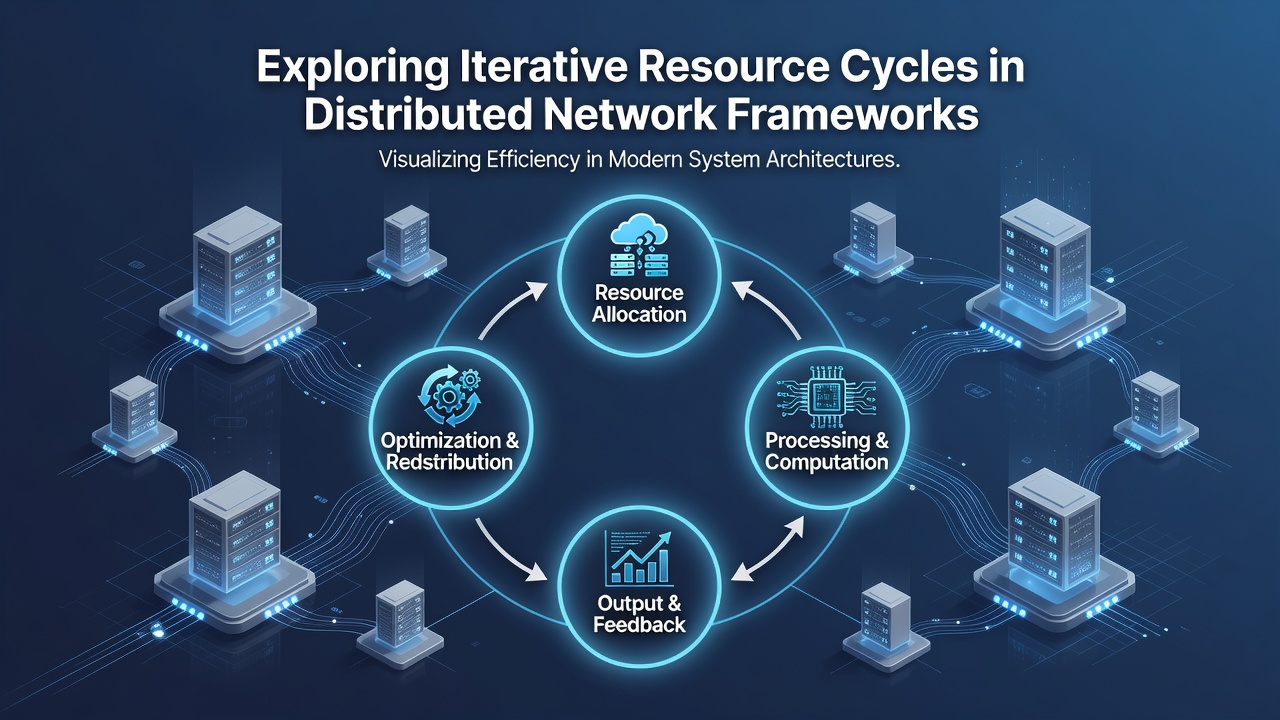
Distributed network frameworks rely on iterative resource cycles to manage allocation and reclamation across nodes while data from recent analyses shows these cycles repeat through feedback mechanisms that adjust to load variations and network conditions change continuously. Researchers have documented how resources move through phases of assignment, utilization, monitoring, and redistribution in systems that span geographic regions and multiple administrative domains.
Core Mechanisms Behind Resource Iteration
Iterative cycles begin when a framework identifies available capacity on participating nodes and assigns tasks accordingly and subsequent monitoring collects metrics on consumption rates before triggering reallocation steps that close the loop. Studies indicate these processes often incorporate predictive models that forecast demand spikes and trigger adjustments ahead of actual overload events while communication protocols exchange state information between nodes to maintain consistency across the entire network. Observers note that frameworks built on this model reduce idle periods because reclaimed resources return to a shared pool faster than in static allocation schemes and coordination algorithms handle conflicts when multiple nodes request overlapping sets of resources at the same time.
Implementation Patterns Across Platforms
Engineers integrate iterative cycles into container orchestration layers by embedding schedulers that evaluate historical usage data before making placement decisions and these schedulers operate alongside monitoring agents that feed real-time telemetry back into the decision engine. In large-scale deployments the cycle length varies according to traffic patterns with shorter iterations occurring during peak hours and longer intervals appearing during off-peak windows and data collected from production environments reveals that cycle frequency correlates with overall throughput improvements when feedback latency stays below defined thresholds. Frameworks also incorporate safety checks that prevent overcommitment during the reclamation phase because premature reuse of resources can lead to contention and performance degradation across dependent services.
Observed Developments in Mid-2026
In September 2026 several research consortia released coordinated findings on cycle optimization techniques that had been tested in multi-region testbeds and the results demonstrated measurable gains in resource utilization when iteration intervals were tuned dynamically rather than held constant. One study tracked cycle behavior across academic and commercial networks and found that adaptive timing reduced average wait times for pending tasks without increasing the frequency of failed allocations. Another report examined energy implications and showed that shorter reclamation phases lowered overall power draw because nodes spent less time in high-utilization states waiting for manual intervention.
Implementation teams have begun embedding machine learning components that refine cycle parameters based on prior outcomes and these components analyze patterns across thousands of completed iterations to suggest adjustments that operators can review before deployment. The approach allows frameworks to respond to seasonal demand shifts without requiring complete redesigns of the underlying allocation logic and early adopters report smoother scaling behavior during unexpected surges.
Integration with Existing Standards and Protocols
Standards bodies have started to incorporate guidelines for iterative resource handling into updated specifications for distributed systems and these guidelines emphasize the need for interoperable telemetry formats so that cycles can span heterogeneous environments without custom translation layers. Researchers at institutions across North America and Europe have contributed test suites that verify compliance with the emerging recommendations and the suites check for correct handling of edge cases such as partial node failures during the middle of an iteration. Industry groups focused on cloud infrastructure have also published reference architectures that illustrate how cycle management fits alongside established practices for service discovery and load balancing.
Academic papers continue to explore theoretical bounds on cycle efficiency and several recent works derive limits based on communication latency and state synchronization costs while simulation results align closely with measurements taken from operational clusters. Those who have implemented these concepts in production note that the theoretical models provide useful starting points even when real-world variables introduce deviations that require ongoing tuning.
Conclusion
Iterative resource cycles form a foundational element in modern distributed network frameworks because they enable continuous adaptation to changing conditions while maintaining operational stability across large node populations. Data gathered through 2026 indicates that refinements in feedback mechanisms and predictive tuning continue to improve utilization metrics and reduce waste and further work on standardization supports broader adoption across diverse deployment scenarios. The patterns observed so far suggest that frameworks will keep evolving these cycles as network scales grow and new classes of applications place additional demands on shared infrastructure.